
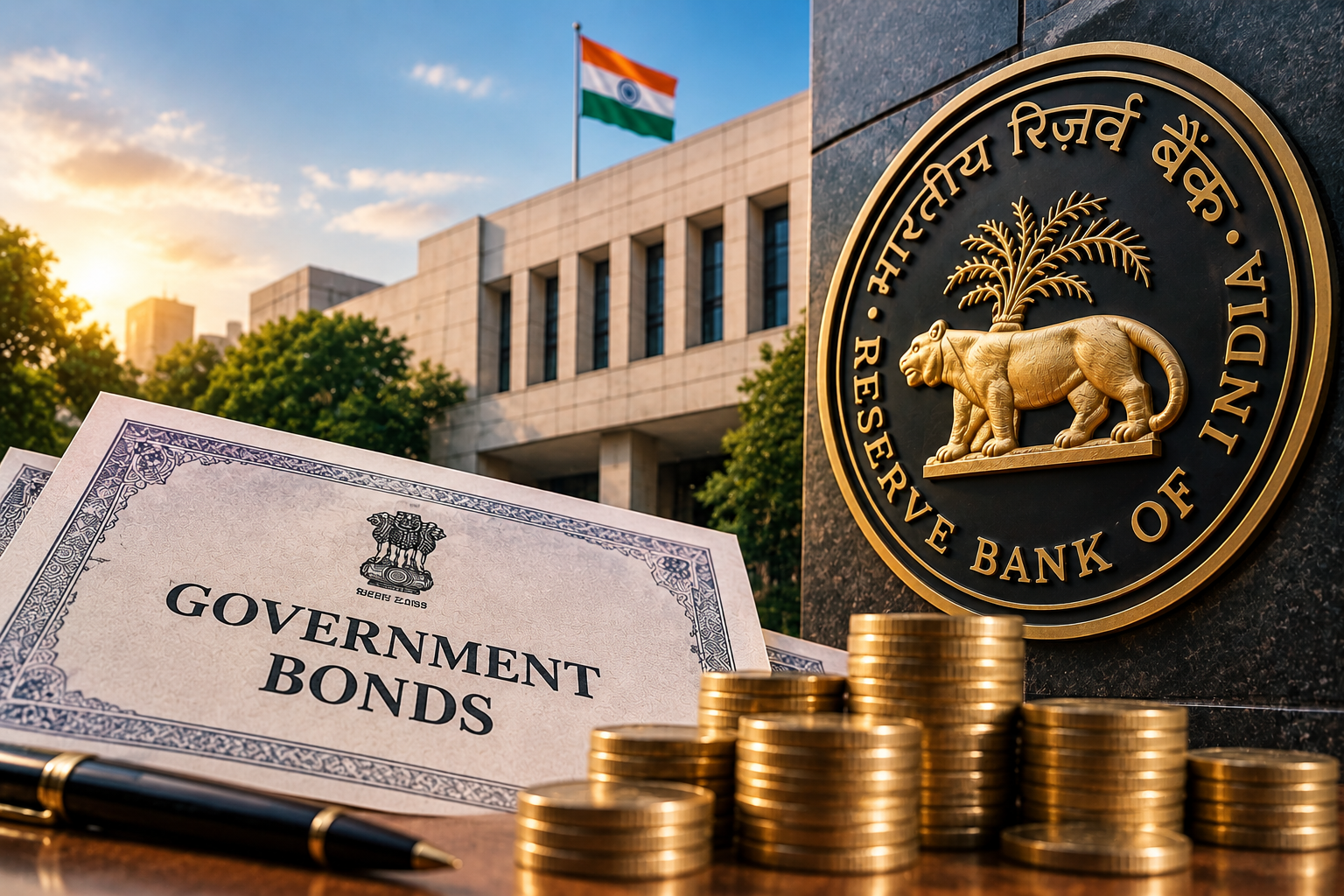
The Reserve Bank of India (RBI) conducted an open market operation (OMO) bond sale on September 18, 2026, to manage liquidity conditions in the banking system. The move aims to absorb excess funds while maintaining stability in interest rates and financial markets. The bond sale received strong investor participation, highlighting market attention towards RBI’s liquidity measures.
Key Pointers:
- RBI uses OMO bond sales to control excess liquidity in the financial system.
- Strong demand from investors was seen during the bond sale.
- Government borrowing and RBI actions remain key factors influencing bond yields.
- Liquidity management helps balance economic growth and inflation control.
RBI’s latest liquidity operation reflects its focus on maintaining financial stability. Market participants will continue tracking RBI policies, bond yields and liquidity conditions for future interest rate trends.
Reserve Bank of India (RBI) ne 18 September 2026 ko banking system mein liquidity conditions ko manage karne ke liye Open Market Operation (OMO) ke tahat bond sale conduct kiya. Is step ka aim market mein maujood extra funds ko absorb karna aur interest rates aur financial markets mein stability maintain karna hai. Bond sale ko investors se strong response mila, jo RBI ke liquidity management measures par market ke focus ko dikhata hai.
Key Pointers:
- RBI OMO bond sales ka use financial system mein excess liquidity ko control karne ke liye karta hai.
- Bond sale ke dauran investors ki taraf se strong demand dekhi gayi.
- Government borrowing aur RBI ke decisions bond yields ko influence karne wale important factors hain.
- Liquidity management economic growth aur inflation control ke beech balance banane mein help karta hai.
RBI ka latest liquidity operation financial stability maintain karne par focus ko highlight karta hai. Market participants aage bhi RBI policies, bond yields aur liquidity conditions par nazar rakhenge, jo future interest rate trends ko impact kar sakte hain.