
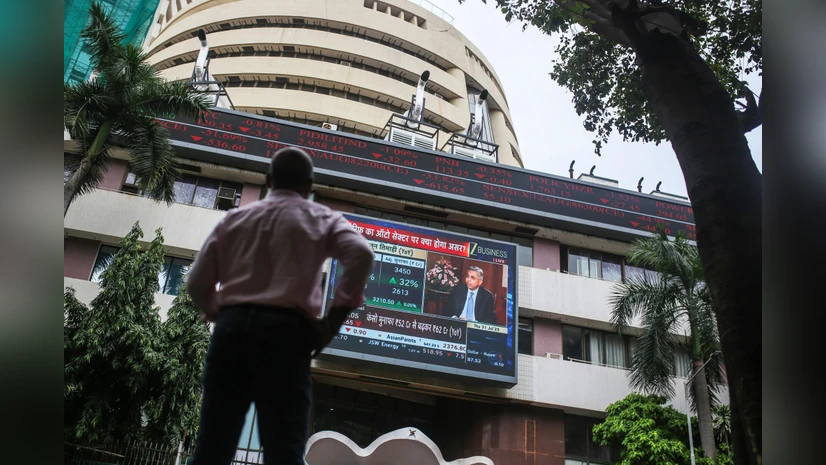
Indian equity markets closed slightly higher on February 4, supported by selective buying in auto and metal stocks, even as IT shares remained under pressure.
Investors stayed cautious while tracking developments related to the proposed India-US trade deal and the upcoming RBI Monetary Policy Committee (MPC) meeting.
Benchmark indices Sensex and Nifty moved in a narrow range for most of the session, reflecting mixed global cues and a wait-and-watch approach ahead of key macro events. Weakness in IT stocks weighed on overall sentiment, driven by concerns over global demand and subdued earnings outlook.
Meanwhile, quarterly earnings remained in focus as several companies announced their Q3 results, leading to stock-specific movements across sectors. Market participants continued to assess corporate performance alongside broader economic signals.
Experts said that clarity from the RBI MPC meeting on interest rates and policy stance could set the near-term direction for the markets. Until then, volatility is expected to persist, with investors likely to remain selective and cautious in their approach.
Indian stock market ne February 4 ko mixed cues ke beech halka sa positive close diya. Sensex aur Nifty ne modest gains ke saath session khatam kiya, jab investors India-US trade deal se judi developments aur aane wali RBI Monetary Policy Committee (MPC) meeting par nazar banaye hue the.
Market opening ke waqt global cues subdued rahe, lekin din bhar selective buying dekhne ko mili. Auto aur metal stocks ne achha perform kiya aur indices ko support diya. Iske ulat, IT stocks par selling pressure bana raha, jahan weak global demand aur cautious outlook ka asar dikha.
Investors ke liye Q3 results bhi key focus area rahe, jismein kai companies ke earnings numbers ne individual stocks mein volatility create ki. Experts ke mutabik, RBI MPC se interest rates par clarity milne ke baad market mein aage ki direction zyada clear ho sakti hai.
Overall, market sentiment cautious optimism ke saath bana hua hai, jahan short-term mein stock-specific action dominate kar sakta hai, jabki broader indices macro developments ka wait kar rahe hain.