
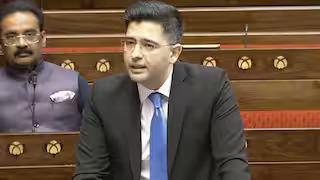
Union Budget 2026-27 ko lekar Rajya Sabha mein aaj ek important debate hui, jahan Aam Aadmi Party ke MP Raghav Chadha ne demand kiya hai ki equities par Long-Term Capital Gains (LTCG) tax ko individual investors ke liye abolish (khattam) kiya jaana chahiye.
Chadha ne Budget discussion ke dauran kaha ki STT (Securities Transaction Tax) par hui recent hike — especially Futures & Options segment par — sahi direction mein ek kadam hai kyunki isse speculation control ho sakta hai.
Lekin unka argument ye tha ki STT aur LTCG dono ek saath lagu rehne se long-term investing discouraged ho raha hai.
Unhone point out kiya ki STT jab pehle introduce hua tha, tab LTCG tax 0% tha — aur aaj dono taxes saath chalne ki wajah se retail aur genuine long-term investors par burden badh raha hai.
Chadha ne international models ka zikr karte hue bataya ki Switzerland, Singapore, UAE aur Hong Kong jaise deshon mein long-term equity gains par tax nahi hai, aur isse un markets mein investor participation zyada hai.
Chadha ka kehna hai ki LTCG tax ko individual investors ke liye nil karne se
- household savings productivity assets jaise equities mein shift ho sakti hain,
- long-term investing ko encourage mil sakta hai,
- gold aur real estate jaise traditional avenues ke mukable equities attractive ban sakta hai.
Unhone STT hike ko F&O speculation ko curb karne wala move bataya, lekin saath hi kaha ki dono taxes saath hona long-term investors ke liye unfair hai.
Market watchers kehte hain ki LTCG abolition ki demand investors ke sentiments ko reflect karti hai,
lekin government ki final stance abhi pending hai. Analysts note karte hain ki agar LTCG ko individual level par eliminate kiya gaya, toh equity markets mein participation aur growth ko support mil sakta hai — lekin iske fiscal implications par bhi dhyan dena hoga.
Amid the recent hike in Securities Transaction Tax (STT), Rajya Sabha MP Raghav Chadha has called on the government to abolish Long-Term Capital Gains (LTCG) tax on equities for individual investors, arguing that the current tax structure discourages long-term investing.
Speaking during the Budget discussion in the Upper House, the Aam Aadmi Party (AAP) leader said that levying both STT and LTCG on equity investments amounts to double taxation, placing an undue burden on retail and long-term investors.
He noted that when STT was originally introduced, long-term equity gains were exempt from tax, a balance that has since been disrupted.
Chadha supported the government’s move to increase STT—particularly in the futures and options (F&O) segment—saying it could help curb excessive speculation in the markets. However, he argued that long-term investors should not be penalised while speculative trading is being targeted.
Citing global examples, Chadha pointed out that countries such as Singapore, Switzerland, the UAE and Hong Kong do not impose taxes on long-term equity gains, which has helped deepen investor participation in their capital markets.
He said India should follow a similar approach to channel household savings into productive financial assets like equities, instead of traditional investments such as gold or real estate.
Market participants say the demand reflects growing concerns among retail investors over rising transaction costs and taxes. While abolishing LTCG tax could improve investor sentiment and boost equity participation, analysts caution that the government will also need to weigh the potential fiscal impact of such a move.
The government has not yet responded to Chadha’s demand, and its final stance on equity taxation remains to be seen.