
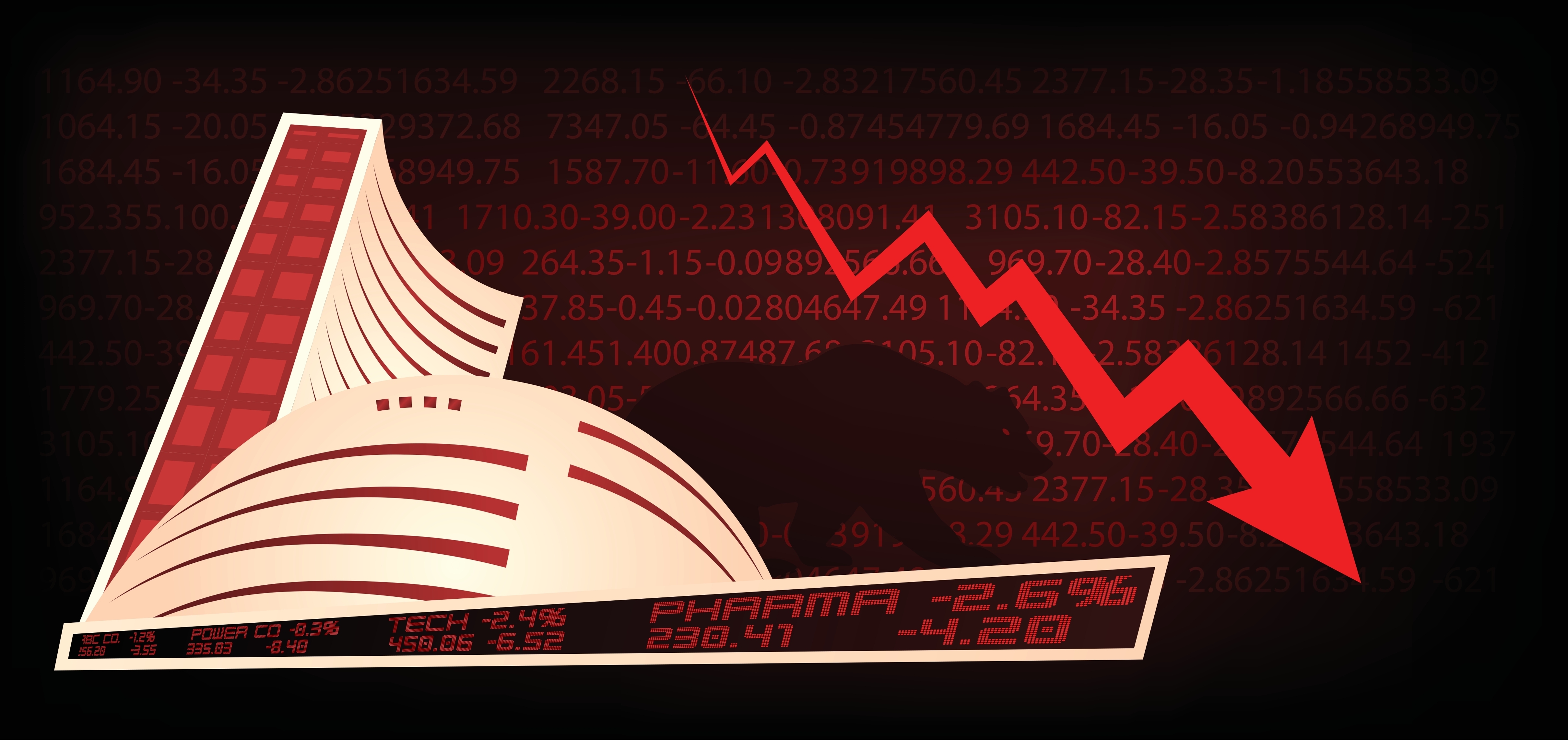
Indian equity markets witnessed a sharp decline as the BSE Sensex plunged over 600 points, while the Nifty 50 slipped below the 24,200 mark, eroding investor wealth amid broad-based selling across sectors.
Market experts believe the decline was not driven by a single factor but by a combination of global and domestic concerns that weighed heavily on investor sentiment.
📉 What Triggered the Market Fall?
1. Rising Geopolitical Tensions
- Escalating tensions in the Middle East increased uncertainty in global financial markets.
- Investors shifted towards safer assets, reducing exposure to equities.
2. Crude Oil Prices Remain Elevated
- Brent crude continued trading at elevated levels.
- As India imports nearly 85% of its crude oil requirement, higher oil prices raise concerns over inflation, fiscal deficit and corporate profitability.
3. Banking Stocks Under Pressure
- Heavyweight private banks such as HDFC Bank, Axis Bank and Kotak Mahindra Bank witnessed selling pressure.
- Investors remained cautious despite healthy business updates due to concerns over margins and earnings outlook.
4. Weak Global Market Cues
- Asian and other global equity markets traded lower, creating a negative sentiment for Indian equities.
- Global risk-off sentiment led investors to reduce exposure across emerging markets.
5. Rising Bond Yields
- Higher bond yields made fixed-income investments relatively more attractive.
- This reduced investor appetite for equities, especially in interest-rate-sensitive sectors.
6. Weakening Indian Rupee
- The rupee remained under pressure against the US dollar.
- A weaker currency increases import costs and can negatively impact foreign investor sentiment.
📊 Why Did the Fall Look So Sharp?
The banking and financial sector carries significant weight in benchmark indices like the Sensex and Nifty. Selling in these heavyweight stocks amplified the overall decline in the market.
Additionally, investors booked profits after the recent market rally while remaining cautious ahead of upcoming corporate earnings and global macroeconomic developments.
📌 What Should Investors Do?
Market experts suggest that short-term volatility is a normal part of equity investing.
Key takeaways:
- ✔️ Avoid panic selling during market corrections.
- ✔️ Focus on company fundamentals rather than daily price movements.
- ✔️ Monitor global events, crude oil prices and interest rate trends.
- ✔️ Maintain a diversified portfolio and invest with a long-term perspective.
Indian stock market mein aaj tez selling dekhne ko mili. BSE Sensex 600 se zyada points gir gaya, jabki Nifty 50 24,200 ke neeche fisal gaya. Is girawat ki wajah sirf ek factor nahi tha, balki kai global aur domestic concerns ne milkar market sentiment ko weak kar diya.
Aaiye simple language mein samajhte hain ki aaj market mein itni badi girawat kyun aayi.
📉 1. Middle East Tensions Ne Badhayi Chinta
- Middle East mein badhte geopolitical tensions ne global investors ko cautious bana diya.
- Jab duniya mein uncertainty badhti hai, investors generally risky assets jaise stocks se paisa nikaal kar safe assets ki taraf move karte hain
🛢️ 2. Crude Oil Ki Keemat Upar
- Crude oil prices elevated level par bani hui hain.
- India apni oil requirement ka lagbhag 85% import karta hai.
- Mehenga crude matlab:
- Inflation badhne ka risk
- Import bill badhna
- Companies ke profit margins par pressure
🏦 3. Banking Stocks Mein Selling
- HDFC Bank, Axis Bank aur Kotak Mahindra Bank jaise heavyweight stocks mein selling dekhne ko mili.
- Loan growth achhi hone ke bawajood investors ko future margins aur earnings ko lekar concern raha.
Kyuki banking stocks ka Sensex aur Nifty mein bada weightage hota hai, inmein girawat ka seedha asar poore market par pada.
🌍 4. Global Markets Se Weak Signals
- Asian aur global stock markets bhi pressure mein the.
- Jab global sentiment weak hota hai, uska asar Indian market par bhi dekhne ko milta hai.
📈 5. Bond Yields Badhne Ka Asar
- Rising bond yields ka matlab fixed-income investments zyada attractive lagne lagte hain.
- Is wajah se kuch institutional investors equities se paisa nikaal kar bonds ki taraf shift karte hain.
💵 6. Rupee Hua Kamzor
- Indian Rupee US Dollar ke mukable pressure mein raha.
- Weak rupee import cost badhata hai aur foreign investors ke sentiment ko bhi impact karta hai.
Yaad Rakhiye:
✅ Market sirf company ke results par react nahi karta.
✅ Global news, crude oil, interest rates aur currency movement bhi market ko strongly impact karte hain.
✅ Short-term volatility stock market ka normal hissa hai.
✅ Long-term investors ko panic selling ke bajay fundamentals aur portfolio allocation par focus karna chahiye.