
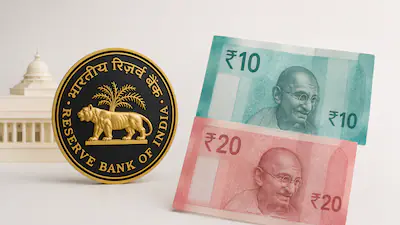
India may soon witness a change in its currency system as the Central Government has approved the Reserve Bank of India’s (RBI) plan to issue 2 billion polymer banknotes of ₹10 and ₹20 denominations on a trial basis.
Under the proposal, RBI will introduce 1 billion polymer notes each of ₹10 and ₹20 for field testing. If the trials prove successful, the government may consider regular issuance of polymer currency in these denominations.
Polymer notes, also known as plastic currency, are considered more durable compared to traditional paper notes. They are designed to withstand moisture, dirt, and daily wear and tear, which can increase their lifespan and potentially reduce currency replacement costs.
The move is aimed at improving currency management, enhancing durability, and exploring advanced security features to make banknotes more efficient and secure.
However, the introduction of polymer notes does not mean that paper currency will be replaced immediately. Existing paper notes will continue to remain legal tender, while polymer notes will initially circulate only as part of the trial process.
Key Points
- ✅ RBI gets approval to issue 2 billion polymer banknotes for trials.
- ✅ Trial will include ₹10 and ₹20 denomination notes.
- ✅ Around 1 billion notes of each denomination will be introduced.
- ✅ Polymer notes offer better durability and resistance against moisture and damage.
- ✅ Paper currency will continue to remain in circulation.
- ✅ Successful trials could pave the way for wider adoption of polymer notes in India.
India’s move towards polymer currency marks an effort to modernise its cash management system. If successful, these durable notes could bring efficiency, longer currency life, and improved security features to everyday transactions.
India ki currency system mein ek bada badlav dekhne ko mil sakta hai. Central Government ne Reserve Bank of India (RBI) ko ₹10 aur ₹20 denomination ke 2 billion polymer banknotes (plastic notes) ke field trials ke liye approval de diya hai.
Is proposal ke tahat RBI ₹10 ke 1 billion aur ₹20 ke 1 billion polymer notes issue karega. Ye notes pehle trial basis par market mein circulate kiye jayenge. Agar trials successful rahe, to in denominations mein polymer notes ka regular issuance shuru kiya ja sakta hai.
Polymer notes traditional paper notes ke comparison mein zyada durable hote hain. Ye paani, moisture aur daily wear & tear ko better handle kar sakte hain, jiski wajah se inki life lambi ho sakti hai aur currency replacement cost kam ho sakti hai.
Government ka ye step abhi paper currency ko replace karne ke liye nahi hai. Existing paper notes circulation mein bane rahenge aur polymer notes sirf testing ke purpose se introduce kiye jayenge.
Key Points
- ✅ RBI ko ₹10 aur ₹20 ke 2 billion polymer notes ke trial ki approval.
- ✅ ₹10 aur ₹20 denomination ke 1-1 billion notes issue kiye jayenge.
- ✅ Polymer notes zyada durable aur moisture-resistant hote hain.
- ✅ Trial successful hone ke baad regular issuance par decision liya jayega.
- ✅ Filhaal paper notes ko replace karne ka koi plan nahi hai.
- ✅ India ka aim currency management ko aur efficient aur secure banana hai.
Cashless economy ke badhte trend ke beech bhi cash ki demand bani hui hai. Polymer currency ka trial India ke currency system ko modernise karne ki direction mein ek bada step ho sakta hai.