
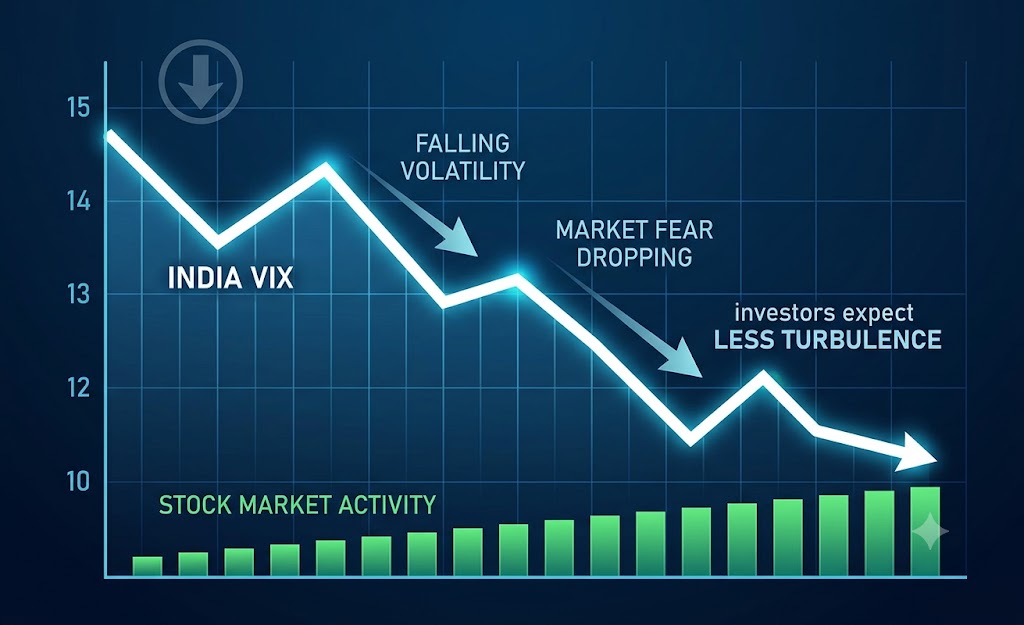
India’s volatility index, India VIX, dropped nearly 4% to around 10.91, signalling that short-term fear among market participants has eased.
🔹 VIX at 10.91 suggests relatively lower expected volatility
🔹 Investor sentiment has improved despite ongoing geopolitical tensions
🔹 Crude oil prices remain an important risk for Indian markets
🔹 Lower volatility could support a more stable trading environment
💡 Why does India VIX matter?
India VIX reflects the market’s expectation of volatility in the near term. When VIX falls, it generally indicates that investors expect less turbulence in the market.
However, this doesn’t mean risks have disappeared. Global developments, crude oil movements, foreign investor activity and geopolitical tensions can quickly change market sentiment.
📌 For investors: A lower VIX can indicate calmer markets, but it should not be considered a standalone signal for making investment decisions.
India ka volatility index India VIX nearly 4% girkar 10.91 ke aas-paas aa gaya hai. Ye signal deta hai ki short-term mein investors ka market fear thoda cool down hua hai.
🔹 VIX at 10.91 — relatively lower volatility ka indication
🔹 Geopolitical tensions ke bawajood sentiment mein improvement
🔹 Crude oil prices abhi bhi Indian market ke liye major risk
🔹 Lower VIX se trading environment mein stability ka signal mil sakta hai
💡 India VIX important kyun hai?
India VIX market mein expected volatility ko measure karta hai. Jab VIX girta hai, iska generally matlab hota hai ki investors near term mein market mein kam turbulence expect kar rahe hain.
Lekin iska matlab ye nahi ki market ke saare risks khatam ho gaye. Global news, crude oil, FII activity aur geopolitical tensions sentiment ko quickly impact kar sakte hain.
📌 Simple takeaway: VIX ka girna market ke liye positive stability signal ho sakta hai, lekin investment decision sirf VIX ko dekhkar nahi lena chahiye.