
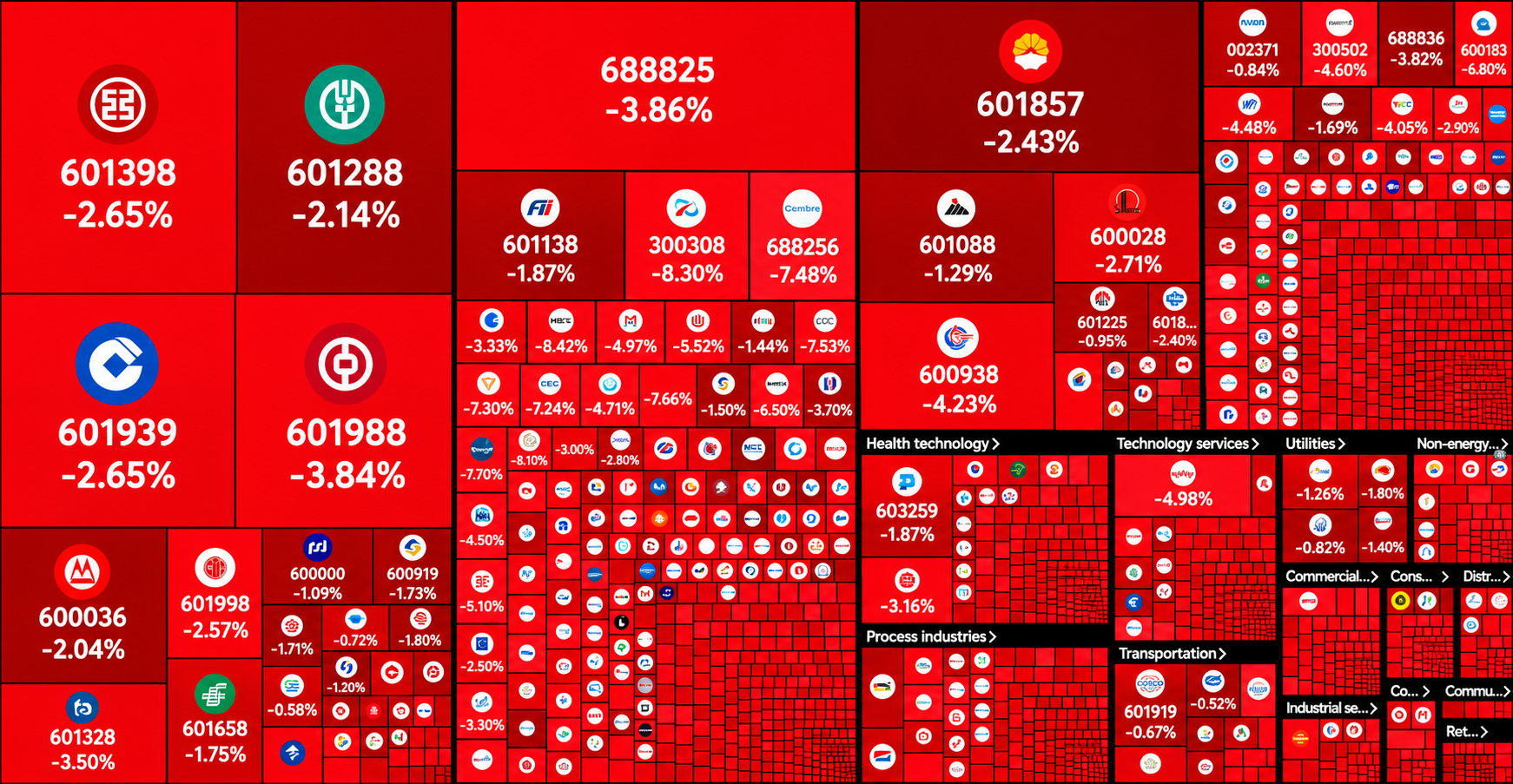
Chinese stocks witnessed a sharp sell-off on November 3, with more than ¥1.58 trillion (around $237 billion) in market value wiped out within the first 15 minutes of trading. The Shanghai Composite Index dropped around 1.5% at the opening, while technology and AI-related stocks faced heavy selling pressure.
The decline came despite fresh efforts by Chinese authorities to stabilise the market. On November 2, the People’s Bank of China announced a new round of liquidity support through its securities swap facility, with applications from financial institutions exceeding ¥100 billion. Regulators also introduced measures to encourage share buybacks and support stock prices.
However, investor confidence remains weak amid concerns over China's economic slowdown, weak consumer demand and falling technology stocks. The CSI 300 had already declined 8.5% in October, marking its worst monthly performance since early 2016.
The latest sell-off highlights the challenge facing Chinese policymakers as they try to restore confidence in the country's stock market.
3 November ko Chinese stock market mein trading shuru hote hi heavy selling dekhne ko mili. Market open hone ke sirf 15 minutes ke andar ¥1.58 trillion (around $237 billion) ki market value wipe out ho gayi.
Shanghai Composite Index opening ke baad around 1.5% gir gaya, jabki technology aur AI-related stocks mein bhi strong selling pressure raha.
Ye decline aise time par aaya hai jab Chinese authorities market ko support karne ke liye liquidity measures announce kar rahe hain. People's Bank of China ke securities swap facility ke through financial institutions ki applications ¥100 billion se zyada rahi hain.
October mein bhi CSI 300 Index 8.5% gir chuka tha, jo January 2016 ke baad iska worst monthly performance tha.
China ki economic slowdown, weak consumer demand aur technology stocks mein selling ke chalte investor confidence par pressure bana hua hai. Ab dekhna hoga ki government ke support measures market ko recover karne mein kitne effective hote hain.