
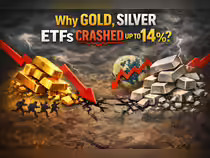
Gold and silver exchange‑traded funds (ETFs) experienced a sharp decline on January 30, 2026, with some ETFs falling as much as 14%. This comes after an extraordinary rally in precious metals prices earlier this month, which saw gold reach above $5,000 per ounce and silver rising by over 50%. The sudden selloff was primarily driven by profit-booking and market caution, as investors reassessed the risk after a rapid price surge.
Silver, which had been outperforming gold with a remarkable surge in early January, slipped nearly 6% from its peak, while gold dipped close to 4%. Analysts noted that while the metals have been considered safe-haven assets, such a dramatic fall highlights the volatility inherent in commodities markets.
The correction sparked debate among market participants: some see it as a temporary pullback and a potential buying opportunity, while others warn that prices could face further downside amid ongoing macroeconomic uncertainties. Factors contributing to the selloff include speculation around U.S. monetary policy, expectations of interest rate changes, and a stronger U.S. dollar, all of which tend to put pressure on precious metals prices.
Historically, gold and silver have shown periods of parabolic rallies followed by sharp corrections. Past instances in 1980, 2011, and 2020 indicate that while metals often rebound, timing such movements is difficult, and investors should remain cautious. Market experts advise monitoring inflation trends, central bank announcements, and global geopolitical developments, as these remain key drivers of gold and silver prices.
Despite the recent selloff, the long-term demand for gold and silver remains strong due to their traditional role as hedges against inflation and currency fluctuations. However, investors are reminded to balance their portfolios and avoid overexposure to volatile assets, especially after such a rapid rally.
The recent price movements also triggered increased interest in ETFs and other investment instruments tied to precious metals. While these allow retail investors to participate in the gold and silver market without physically holding the metals, they also come with risks, particularly during periods of high market volatility.
In conclusion, the crash of up to 14% in gold and silver ETFs serves as a reminder that even safe-haven assets are not immune to market swings. Investors are advised to stay informed, consider risk management strategies, and make decisions based on long-term financial goals rather than short-term price movements.
Gold aur silver ETFs ne 30 January 2026 ko kaafi sharp girawat dekhi, kuch ETFs 14% tak neeche gaye. Ye tab hua jab metals ne pehle hi month mein record-high prices touch kiye the — gold $5,000 per ounce ke upar chala gaya aur silver ne 50% se zyada ka surge dekha. Market mein profit-booking aur caution ki wajah se ye sudden selloff hua, kyunki investors ne rapid rally ke baad apna risk dobara assess kiya.
Silver, jo early January mein gold se outperform kar raha tha, nearly 6% neeche gir gaya, aur gold bhi peak se lagbhag 4% neeche aa gaya. Analysts kehte hain ki metals traditionally safe-haven hote hain, lekin itni tez girawat se market ki volatility ka pata chalta hai.
Ye correction market participants ke beech debate bhi create kar gaya: kuch log ise temporary pullback aur buying opportunity maante hain, jabki dusre log kehte hain ki prices aur neeche ja sakti hain due to macroeconomic uncertainties. Selloff ke peeche key reasons include U.S. monetary policy speculation, interest rate expectations, aur stronger U.S. dollar, jo metals ke prices pe pressure dalte hain.
Historically, gold aur silver ne parabolic rallies ke baad sharp corrections dekhe hain — jaise 1980, 2011, aur 2020 mein. Ye dikhata hai ki metals rebound karte hain, lekin timing predict karna mushkil hota hai. Experts advise karte hain ki investors inflation trends, central bank announcements, aur global geopolitical developments pe nazar rakhein, kyunki ye precious metals ke prices ke major drivers hain.
Recent selloff ke bawajood, gold aur silver ki long-term demand strong hai kyunki ye traditional hedge hain against inflation aur currency fluctuations. Lekin investors ko advice hai ki apne portfolios ko balance karein aur overexposure avoid karein, especially rapid rally ke baad.
Gold aur silver ETFs ne bhi increased interest dekha, kyunki ye retail investors ko metals mein invest karne ka easy option dete hain bina physical metals hold kiye. Lekin high market volatility ke time, inme risk bhi hota hai.
Conclusion:
Gold aur silver ETFs ki 14% tak ki crash ye yaad dilati hai ki even safe-haven assets market swings se immune nahi hote. Investors ko advice hai ki informed rahein, risk management strategies follow karein, aur short-term price movements ke basis pe decisions na le, balki apne long-term financial goals ko focus karein.