
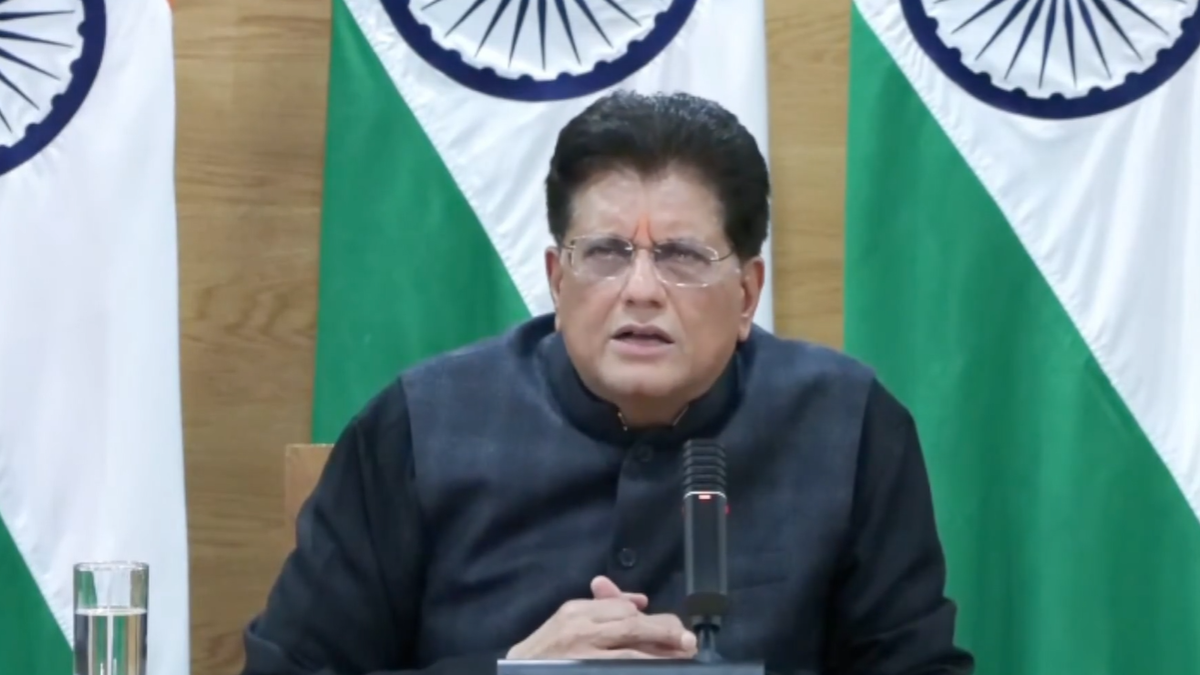
Union Commerce and Industry Minister Piyush Goyal on Tuesday made it clear that sensitive sectors such as agriculture and dairy have been excluded from the scope of the recently announced India-U.S. trade deal, reaffirming the government’s priority to protect domestic farmers and producers. Goyal described the trade agreement as a “farmers-first” deal, emphasising that while various sectors stand to benefit from improved market access and lower tariffs, key areas such as farming and dairy will continue to be shielded from any compulsory market opening under the pact.
=
Addressing reports and opposition criticism over the pact’s impact on agriculture, Goyal stressed that the terms of the agreement were designed with sensitivity to India’s economic and social priorities, ensuring that farmers’ interests are preserved and not compromised by liberalisation pressures. He underscored that protecting sectors tied to rural livelihoods, food security and cultural practices remained central to the government’s negotiating stance throughout discussions with U.S. counterparts.
The decision to exclude agriculture and dairy from the trade deal aligns with India’s longstanding strategy of maintaining safeguards for sectors critical to employment and sustenance, even as other parts of the economy seek greater integration into global supply chains. Analysts say this move will reassure rural stakeholders and shield domestic producers from potential competitive pressures arising from duty eliminations or lowered tariff barriers.
Goyal’s comments came amid heightened political interest in the trade agreement, which also includes provisions for tariff reductions on a wide range of industrial and export-oriented goods. While exporters and market participants have welcomed the broader deal for boosting trade flows and market access, the exclusion of sensitive agriculture and dairy segments reflects India’s cautious approach to balancing trade liberalisation with protection of its large farming and livestock sectors.
Opposition parties have been vocally seeking clarity on the deal’s implications for farmers and consumers, prompting government officials to reiterate that core rural sectors will not be adversely affected, even as the pact aims to strengthen bilateral trade and economic ties.
Union Commerce aur Industry Minister Piyush Goyal ne clear kiya hai ki India–U.S. trade deal ke ambit se agriculture aur dairy jaise sensitive sectors ko exclude rakha gaya hai. Unhone kaha ki sarkar ne is agreement ko final karte waqt farmers aur domestic producers ke interests ko highest priority di hai aur in sectors par kisi bhi tarah ka compromise nahi kiya gaya hai.
Media se baat karte hue Goyal ne bataya ki trade negotiations ke dauran government ka focus ye ensure karna tha ki rural livelihoods, food security aur dairy sector ki stability par koi negative impact na pade. Unhone deal ko “farmers-first approach” par based bataya aur kaha ki India ne hamesha apne sensitive sectors ke liye protective stand liya hai, chahe global trade pressure kitna bhi kyun na ho.
Commerce Minister ne ye bhi kaha ki jabki trade deal ke through kai industrial aur export-oriented sectors ko tariff relief aur better market access milega, agriculture aur dairy jaise core sectors ko poori tarah safeguard kiya gaya hai. Isse Indian farmers aur dairy cooperatives ko foreign competition ke pressure se bachaya ja sakega.
Goyal ke statements opposition ke un sawalon ke beech aaye hain jahan deal ke possible impact par concerns uthaye ja rahe the. Is par response dete hue unhone kaha ki government har trade agreement ko India ke long-term economic aur social interests ko dhyan mein rakhkar negotiate karti hai. Unka kehna tha ki kisi bhi international deal mein national interest se upar kuch nahi hota.
Experts ka bhi maanna hai ki agriculture aur dairy sectors ko deal se bahar rakhna India ki ek well-thought-out trade strategy ka hissa hai, jisse ek taraf exports aur manufacturing ko boost milta hai, aur doosri taraf farmers aur rural economy ko protection milti hai. Overall, government ka message clear hai ki trade growth ke saath-saath domestic sectors ki security bhi equally important hai.