
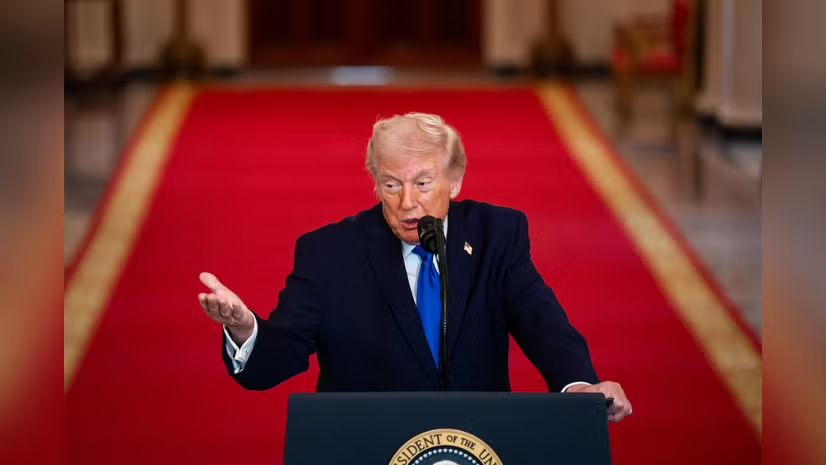
The United States and Israel have launched a sweeping military campaign against Iran, killing the country’s Supreme Leader and other senior officials, but President Donald Trump insists the strikes are a “major combat operation” — not a formally declared war.
The joint offensive, which began on February 28, has rapidly escalated tensions across the Middle East. Trump’s administration has described the attacks as aimed at dismantling Iran’s military and nuclear capabilities without triggering the formal war‑declaration process required by the U.S. Constitution. Under Article I, the President must obtain congressional authorization to declare war, a requirement Trump has so far circumvented by describing the campaign as ongoing operations.
In a video message posted on social media, Trump defended his decision, stating that the strikes will continue until strategic objectives are achieved and warning that more U.S. casualties could occur. U.S. military sources confirmed that three American service members were killed and five others seriously wounded during operations, marking the first U.S. battlefield deaths in the conflict.
Critics from both sides of the U.S. political spectrum have raised alarm over the administration’s decision to proceed without formal congressional authorization. Democratic lawmakers have characterized the campaign as a “war of choice” and argued that Trump has overstepped constitutional limits, while some Republican allies defend the strikes as essential to national security.
Trump’s reluctance to label the operation as a war reflects legal and political considerations. A formal war declaration would require greater oversight and funding approval from Congress, potentially limiting executive action. Administration officials maintain that this terminology does not diminish the seriousness of the campaign but keeps it within the scope of presidential war powers as historically interpreted.
The strikes have also drawn international attention, with regional governments warning of broader escalation and advocates of diplomacy urging de‑escalation. Iran has vowed retaliation, and the situation continues to evolve as both military actions and political debate intensify.
United States aur Israel ne Iran par military strikes kiye hain, jisme Iran ke Supreme Leader aur kuch senior officials ki maut hui hai. Lekin President Donald Trump ne in attacks ko sirf “major combat operation” kaha, aur formally “war” declare nahi kiya.
Ye strikes 28 February ko start hue, aur Middle East me tension kaafi badh gayi hai. Trump ke officials kehte hain ki ye attacks Iran ke military aur nuclear capabilities ko target karne ke liye hain, bina U.S. Constitution ke Article I ke under formal war declare kiye.
Ek social media message me Trump ne apne decision ka defense karte hue kaha ki strikes tab tak chalenge jab tak strategic objectives achieve nahi ho jate. U.S. military sources ke mutabik, is operation me 3 American soldiers ki maut aur 5 seriously wounded hue hain. Ye pehli baar hai jab U.S. battlefield casualties report hui hain.
Political reactions mixed hain. Democratic lawmakers ne ise “war of choice” kaha aur Trump par constitutional limits cross karne ka aarop lagaya, jabki kuch Republican allies ne isse national security ke liye zaroori bataya.
Trump ka “war” nahi bolna legal aur political strategy ka hissa hai. Formal war declare karna Congress ka approval mangta, jo executive actions ko limit kar sakta hai. Administration officials kehte hain ki terminology change karne se campaign ki seriousness kam nahi hoti.
Internationally bhi tension barh rahi hai. Iran ne retaliation ka warning diya hai, aur diplomats aur regional governments de-escalation ki appeal kar rahe hain. Situation abhi bhi evolve ho rahi hai.