
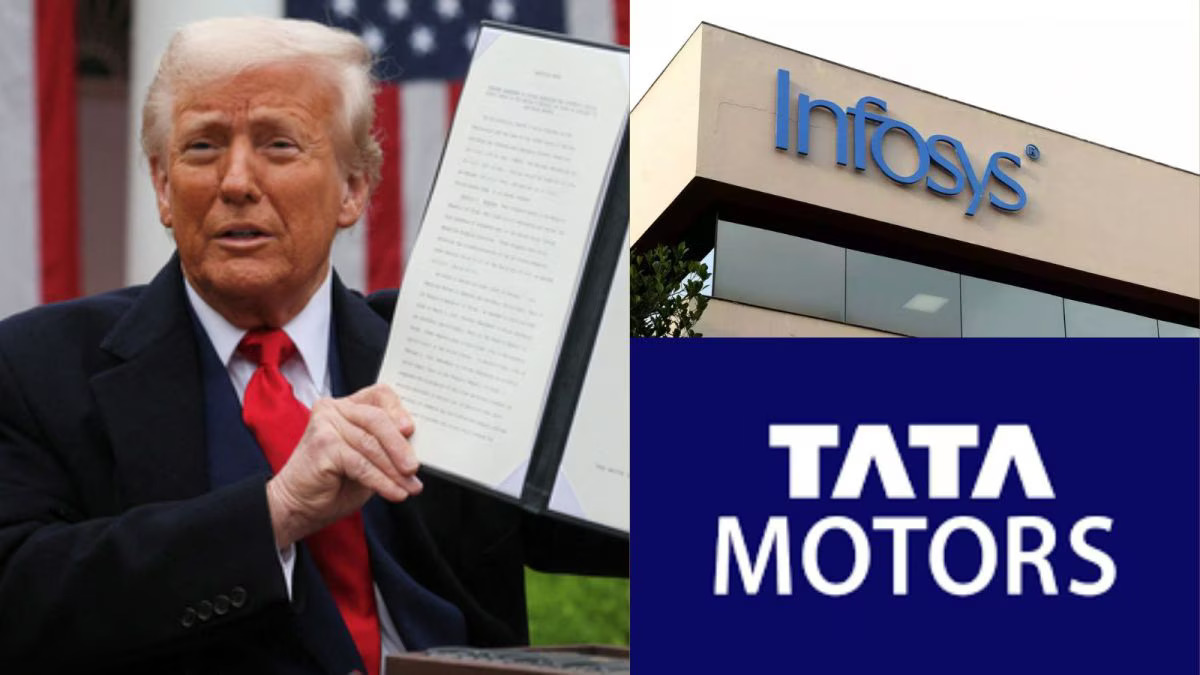
Indian IT giants Tata Consultancy Services (TCS) and Infosys Ltd are expected to face significant cost pressures following the Trump administration’s introduction of a $100,000 fee on new H‑1B visa applications, a move that could reshape hiring and outsourcing strategies for global technology firms.
The new visa fee — the largest restriction yet on employment of skilled foreign workers — targets companies that hire H‑1B workers from abroad. A substantial portion of newly approved H‑1B workers at major Indian IT companies, including Tata and Infosys, would be subject to the fee, potentially increasing labor costs by hundreds of millions of dollars.
Industry officials say the levy could hurt the traditional outsourcing and staffing model that has long underpinned India’s global IT services industry. Firms that rely heavily on sending engineers and specialists to the United States under H‑1B visas may now face tough decisions on future hiring, onshore presence, and pricing of services.
Experts note that the fee — intended to curb perceived misuse of the visa system and encourage local hiring — may also depress demand for new H‑1B petitions, potentially prompting companies to expand offshore operations or shift more work to near‑shore and local teams.
While the rule applies to new applications filed after September 2025 and does not affect visas already issued, its long-term impact could be broad, influencing corporate strategies on staffing, delivery, and global talent mobility.
The development comes amid broader debates in the US over immigration policy, workforce shortages, and the balance between protecting domestic jobs and attracting high-skilled professionals. As firms adjust, the Indian IT sector is expected to watch closely how companies respond to the unprecedented H‑1B fee regime and its implications for future growth.
Indian IT giants Tata Consultancy Services (TCS) aur Infosys Ltd ko Trump administration ke new H-1B visa applications par $100,000 fee lagane ke faisle ke baad bade cost pressures ka samna karna pad sakta hai. Is move se global technology firms ki hiring aur outsourcing strategies par bhi asar padne ke aasaar hain.
Ye naya visa fee, jo skilled foreign workers ke employment par ab tak ka sabse bada restriction mana ja raha hai, un companies ko target karta hai jo foreign H-1B workers hire karti hain. Indian IT majors, jaise Tata aur Infosys, ke kaafi saare newly approved H-1B workers is fee ke daayre mein aa sakte hain, jisse labour cost hundreds of millions of dollars tak badh sakti hai.
Industry officials ka kehna hai ki ye levy India ke global IT services industry ke traditional outsourcing aur staffing model ko nuksaan pahuncha sakti hai. Jo companies US mein engineers aur specialists ko H-1B visas ke through bhejti rahi hain, unhe ab future hiring, onshore presence aur services ki pricing par tough decisions lene pad sakte hain.
Experts ke mutabik, ye fee — jiska aim visa system ke misuse ko kam karna aur local hiring ko encourage karna hai — new H-1B petitions ki demand ko bhi kam kar sakti hai. Iske chalte companies offshore operations badhane ya zyada kaam near-shore aur local teams ko shift kar sakti hain.
Ye rule September 2025 ke baad file hone wali new applications par apply hoga aur pehle se issue ho chuke visas par iska asar nahi padega. Phir bhi, iska long-term impact kaafi broad ho sakta hai, jo staffing, delivery aur global talent mobility se judi corporate strategies ko influence karega.
Ye development US mein immigration policy, workforce shortages aur domestic jobs ko protect karne vs high-skilled talent attract karne par chal rahi broader debate ke beech aaya hai. Jaise-jaise companies adjust karengi, Indian IT sector closely dekhega ki firms is unprecedented H-1B fee regime ka kaise response deti hain aur iska future growth par kya impact padta hai.
This news is for information only and is not investment advice. Please do your own research before making investment decisions.