
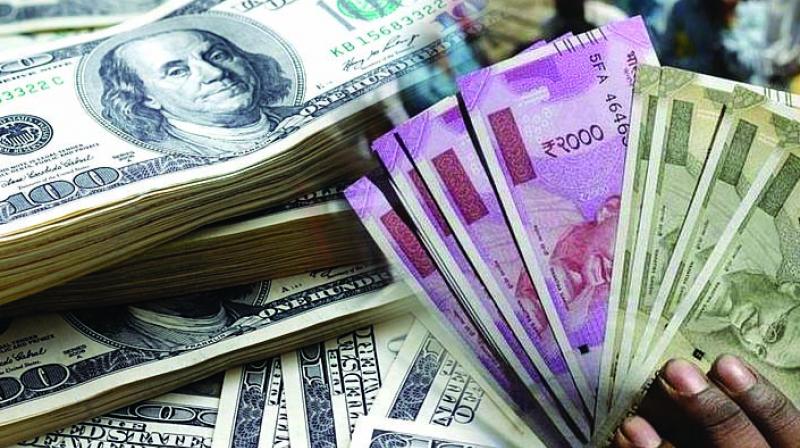
The Indian rupee experienced marked volatility against the U.S. dollar in early trading, reflecting ongoing pressure in the foreign exchange markets amid external and domestic economic uncertainties. Market participants saw wide swings in the USD/INR rate as traders responded to continued foreign fund outflows and persistent demand for the U.S. dollar. This follows a period in which the rupee has slipped to record lows, breaching important psychological levels against the dollar.
Analysts link the heightened currency fluctuations to sustained outflows from Indian assets, uncertainty over trade negotiations with key partners, and broader macroeconomic concerns that have weighed on investor sentiment. Earlier sessions showed the rupee opening at historically weak levels, before modest recoveries following interventions by the Reserve Bank of India (RBI) aimed at calming market swings.
Additionally, the market backdrop includes continued foreign institutional investor (FII) selling, which has kept upward pressure on the U.S. dollar and contributed to the rupee’s status as one of the weaker emerging market currencies this year.
The Economic Times
Overall, the early-trade volatility underscores persistent uncertainty in the forex market and broader financial conditions—with traders closely watching policy responses and global developments that could influence currency direction in the near term.
The Times of India
Indian rupee ne early trading ke dauraan U.S. dollar ke against kaafi zyada volatility dikhayi, jo external aur domestic economic uncertainties ke chalte forex market par pressure ko reflect karta hai. Market participants ne USD/INR rate mein sharp ups and downs dekhe, kyunki traders foreign fund outflows aur U.S. dollar ki strong demand par react kar rahe the. Yeh volatility us phase ke baad aayi hai jab rupee record low levels tak phisla tha aur dollar ke against important psychological levels ko cross kar gaya tha.
Analysts ka maanna hai ki currency mein aayi yeh tezi se badalti movement ka reason Indian assets se lagataar outflows, key trading partners ke saath trade negotiations par uncertainty, aur broader macroeconomic concerns hain, jinhone investor sentiment ko weak kiya hai. Pichhle sessions mein rupee historically weak levels par open hua, lekin baad mein Reserve Bank of India (RBI) ke interventions ke chalte thodi recovery bhi dekhi gayi, jiska aim market volatility ko control karna tha.
Iske alawa, continued foreign institutional investor (FII) selling ki wajah se U.S. dollar par upward pressure bana hua hai, jisne rupee ko is saal weaker emerging market currencies mein shamil kar diya hai.
Overall, early-trade volatility yeh clearly dikhati hai ki forex market aur broader financial conditions mein abhi bhi uncertainty bani hui hai. Traders aane wale time mein policy responses aur global developments par nazar rakhe hue hain, jo currency ki direction ko influence kar sakte hain.
This news is for information only and is not investment advice. Please do your own research before making investment decisions.