
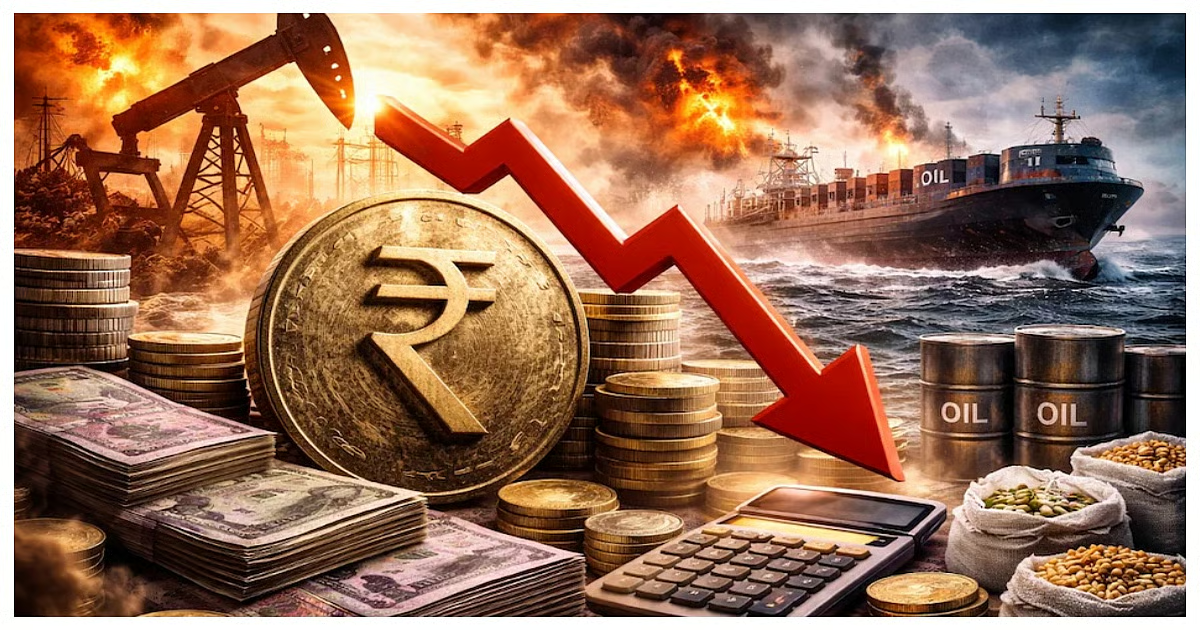
In recent times, several headlines have raised concerns about India’s economic direction — from a weakening rupee to rising oil prices, RBI’s cautious stance, and global geopolitical tensions. These developments have triggered widespread discussion on social media about whether India is heading toward an economic crisis.
However, economists suggest that the situation is not a full-blown crisis but rather an “external pressure phase” driven mainly by global factors like oil volatility and geopolitical risks in the Middle East. Since India imports a large share of its crude oil needs, any rise in global oil prices directly impacts inflation, currency value, and import costs.
The ripple effect is clear — higher oil prices increase India’s import bill, which raises demand for US dollars. This puts pressure on the rupee and leads to imported inflation across sectors like transport, manufacturing, and agriculture.
At the same time, policymakers including the RBI are closely monitoring inflation, currency stability, and foreign capital flows. While occasional foreign investor outflows have added pressure, India’s strong forex reserves, stable banking system, and consistent GDP growth indicate underlying economic resilience.
Experts describe the current phase as “external stress with internal strength” — meaning global headwinds exist, but domestic fundamentals remain strong. Unlike 1991, India is not facing a balance-of-payments crisis, but rather short-term volatility driven by global uncertainty.
Do you think India is just going through a temporary global stress phase, or are these early signs of a deeper economic slowdown?
Aaj kal market aur social media par ye baat kaafi viral ho rahi hai ki kya India ek economic crisis ki taraf ja raha hai. Rupee ka weak hona, oil prices ka badhna, RBI ka cautious stance aur global tensions ne milkar logon ke beech confusion create kar diya hai.
Lekin experts ka maanna hai ki ye situation actual crisis nahi hai, balki “external pressure phase” hai jo global factors ki wajah se ban raha hai. India apni 85% oil requirement import karta hai, isliye crude oil prices badhne ka direct impact inflation, rupee aur import bill par padta hai.
Jab oil mehenga hota hai, toh India ko zyada dollars chahiye hote hain, jisse dollar demand badhti hai aur rupee pressure mein aata hai. Iska effect transport, manufacturing aur daily essentials tak feel hota hai.
Is situation mein RBI aur policymakers currency, inflation aur foreign investment flows ko closely monitor kar rahe hain. Foreign investors ki selling ne short-term pressure zaroor banaya hai, lekin India ke strong forex reserves aur stable economic growth abhi bhi economy ko support kar rahe hain.
Experts is phase ko “external stress with internal strength” kehte hain — matlab bahar se pressure hai, lekin andar se economy strong hai. 1991 ke comparison mein India aaj crisis mein nahi hai, balki ek global volatility phase se guzar raha hai.
Aapke hisaab se kya ye sirf temporary global stress hai ya phir kisi bade economic slowdown ka early signal?