
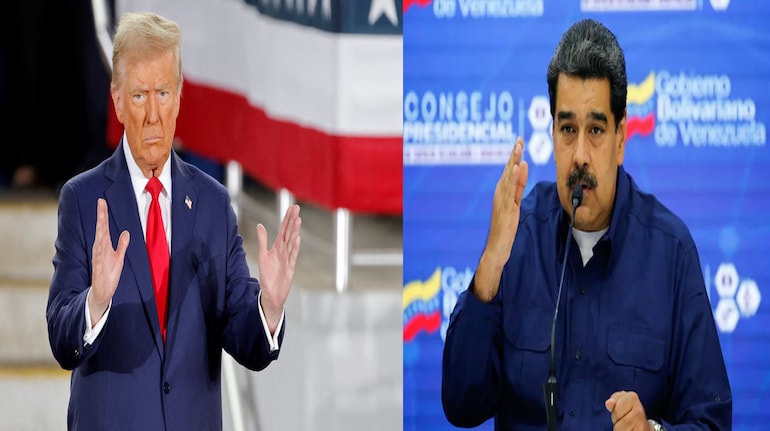
The United States dramatically escalated its actions against Venezuela by launching strikes on Caracas and claiming the capture of President Nicolás Maduro, following a prolonged campaign of economic and geopolitical pressure. This marks the most significant intensification in the long-standing confrontation between Washington and Caracas.
U.S. officials have justified the strikes as part of efforts to disrupt alleged Venezuelan-linked drug trafficking, citing Maduro’s government as associated with criminal networks designated as terrorist organizations. In support of this rationale, the U.S. expanded naval patrols, seized oil tankers, and conducted repeated strikes on vessels reportedly involved in narcotics operations. Critics, however, question the focus and justification of the campaign, noting that Venezuela is not a major source of fentanyl.
Beyond drug enforcement, the Trump administration has pursued a broader strategy aimed at weakening Maduro’s grip on power. The U.S. and its allies have criticized Maduro’s government as authoritarian and corrupt, challenging the legitimacy of elections and calling for a political transition. When sanctions and diplomatic isolation failed to prompt change, military pressure became a more prominent component of U.S. policy.
Economic and strategic interests also inform the escalation. Venezuela holds some of the world’s largest proven oil reserves, and control over its energy resources has long been of interest to global powers. Though the U.S. denies resource motives, access to Venezuelan oil and minerals and the broader geopolitical contest with rivals such as Russia and China amplify the stakes in Washington’s Venezuela policy.
The combination of sanctions, naval pressure, and now military strikes illustrates a multifaceted U.S. campaign designed to exert maximal pressure on the Maduro regime — a campaign that has drawn international scrutiny regarding its legality, strategic risks, and humanitarian impact.
United States ne Venezuela ke khilaf apne actions ko dramatically escalate kar diya hai, jisme Caracas par strikes shamil hain aur US ne claim kiya hai ki President Nicolás Maduro ko capture kar liya gaya hai. Ye step long-standing economic aur geopolitical tensions ke baad sabse bada intensification hai Washington aur Caracas ke beech.
US officials ka kehna hai ki ye strikes Venezuelan-linked drug trafficking ko disrupt karne ke liye kiye gaye, aur Maduro government ko criminal networks ke saath link kiya gaya hai jo terrorist organizations ke taur par designated hain. Iske support mein US ne naval patrols badhaye, kuch oil tankers seize kiye aur vessels par repeated strikes kiye jo allegedly narcotics operations mein involve the. Critics ka kehna hai ki Venezuela fentanyl ka major source nahi hai, isliye campaign ka focus aur justification question mein hai.
Drug enforcement ke alawa, Trump administration ka broader goal hai Maduro ke grip ko weaken karna. US aur allies ne Maduro government ko authoritarian aur corrupt bataya hai, elections ki legitimacy challenge ki aur political transition ka demand kiya. Jab sanctions aur diplomatic pressure fail ho gaya, military pressure ko policy ka key component bana diya gaya.
Economic aur strategic interests bhi escalation ka ek reason hain. Venezuela ke paas world ke largest proven oil reserves hain, aur energy resources par control global powers ke liye important raha hai. US denies karta hai ki motive sirf resources ka hai, lekin oil, minerals aur geopolitical contest (Russia, China ke saath) ko stakes amplify karte hain.
Sanctions, naval pressure aur ab military strikes ka combination US ka multifaceted campaign dikhata hai jo Maduro regime par maximum pressure dalna chahta hai — jise international level par legality, strategic risks aur humanitarian impact ke liye scrutiny ka saamna karna pad raha hai.