
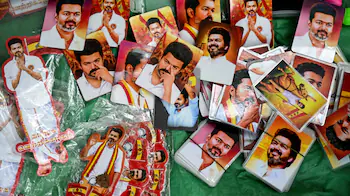
Actor-turned-politician Vijay’s ambitious election promises in Tamil Nadu could require an estimated ₹42,000 crore annually, according to a recent analysis.
The Tamilaga Vettri Kazhagam (TVK) manifesto includes multiple welfare schemes such as monthly financial aid for women, subsidies, education support, and benefits for farmers and youth. For instance, promises like ₹2,500 monthly assistance for women, free services, and loan benefits significantly increase the financial burden on the state.
Experts suggest that while these schemes may boost short-term public support and consumption, funding them could put pressure on Tamil Nadu’s fiscal deficit and budget management. The state government may need to either increase revenue, reallocate spending, or borrow more to meet these commitments.
This raises an important debate: balancing welfare-driven politics with long-term economic sustainability, especially when large-scale promises are made during elections.
Do you think such large welfare promises are sustainable for state economies in the long run?
Actor se politician bane Vijay ke election promises Tamil Nadu mein kaafi bade level par discuss ho rahe hain, kyunki inhe pura karne ke liye lagbhag ₹42,000 crore ka kharcha aa sakta hai.
TVK ke manifesto mein women ke liye ₹2,500 monthly support, free schemes, education benefits aur farmers ke liye support jaise kai welfare promises shamil hain. Ye sab milkar state par kaafi bada financial burden daal sakte hain.
Experts ka kehna hai ki short term mein ye schemes logon ko fayda aur political support de sakti hain, lekin long term mein state ke budget aur fiscal deficit par pressure badh sakta hai. Sarkar ko ya to revenue badhana padega, ya kharcha adjust karna padega, ya phir zyada borrowing karni hogi.
Ye situation ek important sawal uthati hai—kya itne bade welfare promises economically sustainable hain?
Aap kya sochte ho—freebies aur welfare schemes development ke liye zaroori hain ya economy ke liye risk?