
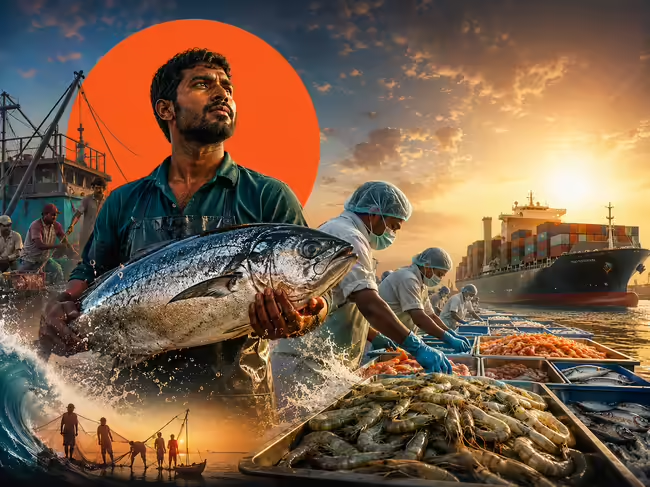
India’s seafood sector is emerging as one of the country’s biggest export success stories after overcoming heavy US tariffs and global trade disruptions. Despite facing tariffs as high as 50% from the United States last year, India’s seafood exports touched a record $8.28 billion in FY26, showing remarkable resilience and global demand strength.
The US remained India’s largest seafood market, but exports to America fell sharply due to higher tariffs and trade restrictions. In response, India aggressively diversified its export destinations, increasing shipments to China, the European Union, Southeast Asia, and other international markets.
Frozen shrimp continued to dominate India’s seafood exports, contributing more than two-thirds of total export earnings. Andhra Pradesh, which produces nearly 80% of India’s shrimp exports, played a major role in maintaining global supply despite disruptions caused by rising trade costs and geopolitical tensions.
India also strengthened its position through regulatory improvements and food safety compliance. The European Union recently restored India on its approved seafood export list, boosting confidence in Indian marine products and opening opportunities for long-term export growth.
The government is now considering a Production Linked Incentive (PLI) scheme for seafood MSMEs to boost value-added exports, improve infrastructure, and expand India’s exporter base. Experts believe this could turn India into a global seafood export powerhouse over the next decade.
Do you think India’s seafood industry can become one of the country’s biggest long-term export growth engines alongside IT and manufacturing?
India’s seafood sector is emerging as one of the country’s biggest export success stories after overcoming heavy US tariffs and global trade disruptions. Despite facing tariffs as high as 50% from the United States last year, India’s seafood exports touched a record $8.28 billion in FY26, showing remarkable resilience and global demand strength.
The US remained India’s largest seafood market, but exports to America fell sharply due to higher tariffs and trade restrictions. In response, India aggressively diversified its export destinations, increasing shipments to China, the European Union, Southeast Asia, and other international markets.
Frozen shrimp continued to dominate India’s seafood exports, contributing more than two-thirds of total export earnings. Andhra Pradesh, which produces nearly 80% of India’s shrimp exports, played a major role in maintaining global supply despite disruptions caused by rising trade costs and geopolitical tensions.
India also strengthened its position through regulatory improvements and food safety compliance. The European Union recently restored India on its approved seafood export list, boosting confidence in Indian marine products and opening opportunities for long-term export growth.
The government is now considering a Production Linked Incentive (PLI) scheme for seafood MSMEs to boost value-added exports, improve infrastructure, and expand India’s exporter base. Experts believe this could turn India into a global seafood export powerhouse over the next decade.
Do you think India’s seafood industry can become one of the country’s biggest long-term export growth engines alongside IT and manufacturing?