
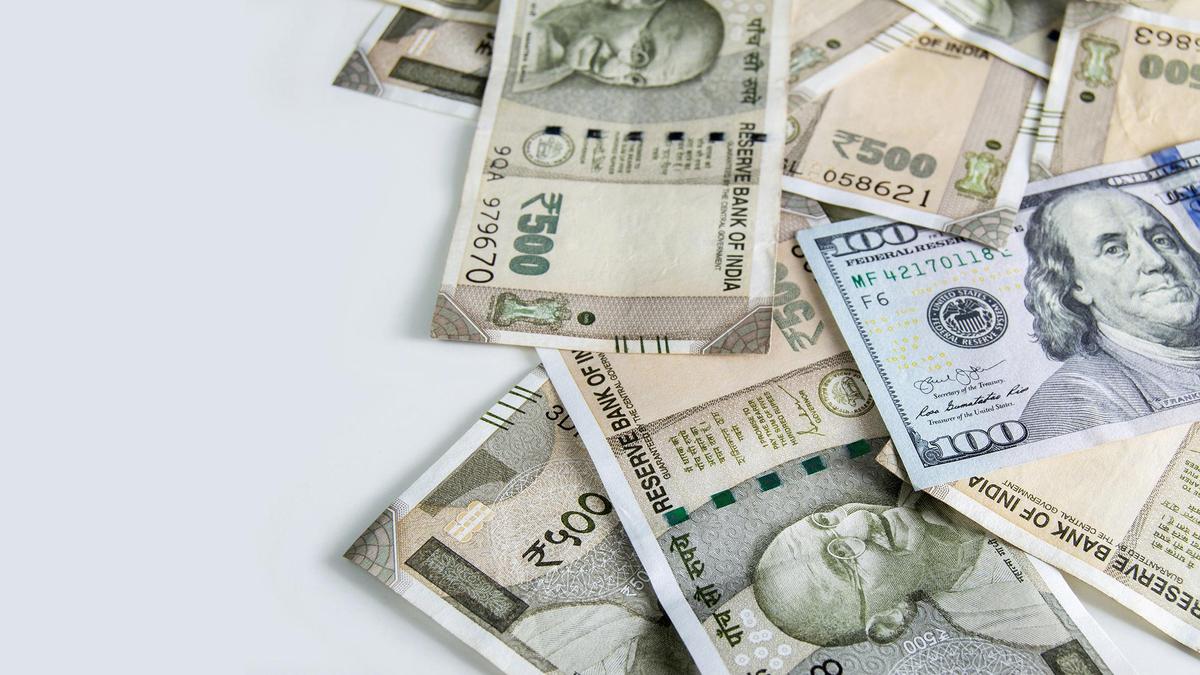
The Indian rupee has fallen to a historic low of 96.90 against the US dollar in early trade, marking one of the sharpest currency declines seen in recent years. The fall comes amid rising global uncertainty, elevated crude oil prices, foreign investor outflows, and continued geopolitical tensions in the Middle East.
Experts say India’s heavy dependence on crude oil imports is one of the biggest reasons behind the rupee’s weakness. As oil prices rise globally, India needs more dollars to pay for imports, increasing pressure on the currency. At the same time, strong US bond yields and expectations of possible US interest rate hikes are attracting global money toward the dollar.
Foreign Institutional Investors (FIIs) have also been continuously pulling money out of Indian markets, adding further pressure on both the rupee and stock market sentiment. Analysts believe that if global crude prices remain high and geopolitical tensions continue, the rupee could remain volatile in the near term.
A weaker rupee can make imported goods more expensive, especially fuel, electronics, and international travel. It may also increase inflation pressure inside India. However, some export-focused sectors could benefit because Indian goods become relatively cheaper globally.
Investors are now closely watching the Reserve Bank of India’s next steps and whether global tensions cool down in the coming weeks.
Do you think the falling rupee will increase inflation and make daily life more expensive in India?
Indian rupee early trade me US dollar ke against record low 96.90 tak gir gaya hai. Ye recent years ki sabse badi currency weakness me se ek mani ja rahi hai. Experts ke according rising crude oil prices, FIIs selling, strong US dollar aur Middle East tensions is girawat ke major reasons hain.
India kaafi had tak crude oil imports par dependent hai. Jab global oil prices badhte hain, tab India ko imports ke liye zyada dollars chahiye hote hain, jiski wajah se rupee par pressure aur badh jata hai. Saath hi US bond yields aur possible US interest rate hikes ki expectations ki wajah se global investors dollar ki taraf shift ho rahe hain.
Foreign Institutional Investors (FIIs) bhi Indian markets se lagatar paisa nikal rahe hain, jiski wajah se rupee aur stock market dono pressure me hain. Analysts ka maanna hai ki agar crude oil prices aur geopolitical tensions high rehte hain, toh rupee me volatility abhi aur dekhne ko mil sakti hai.
Weak rupee ka direct impact imported goods par padta hai. Petrol-diesel, electronics, foreign travel aur imported products aur mehange ho sakte hain. Isse inflation pressure bhi badh sakta hai. Haan, export companies ko iska kuch benefit mil sakta hai kyunki Indian products globally comparatively cheaper ho jate hain.
Ab investors ki nazar RBI ke next moves aur global tensions par bani hui hai.
Aapke hisaab se weak rupee ka sabse bada impact kis par padega — petrol prices, inflation ya stock market?