
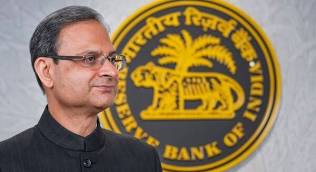
The Reserve Bank of India (RBI), in its latest Monetary Policy Committee (MPC) meeting for the fiscal year 2026–27, has unveiled a comprehensive package of reforms aimed at making banking easier, safer, and more inclusive for Indian consumers and businesses.
Under the leadership of Governor Sanjay Malhotra, the RBI announced a series of regulatory and policy measures designed to strengthen customer protection, enhance digital payment security, expand credit access, especially for Micro, Small and Medium Enterprises (MSMEs), and support smoother operations for banks and non-bank financial companies (NBFCs).
Key initiatives include the issuance of draft guidelines to curb mis-selling, improve loan recovery practices, and limit customer liability in unauthorized electronic transactions. A compensation framework has also been proposed to reimburse customers up to ₹25,000 for losses from small-value digital fraud, offering a new safety net for digital banking users.
To boost financial inclusion, the RBI will revamp key schemes like the Lead Bank Scheme and Kisan Credit Card Program and launch a unified reporting portal to enhance delivery and monitoring. The limit on collateral-free loans for MSMEs is proposed to be doubled, widening access to affordable credit for smaller businesses.
The central bank has also announced regulatory relief for select NBFCs and plans to strengthen the governance and lending capacity of urban co-operative banks (UCBs), including relaxing housing loan norms and launching a training initiative for UCB staff.
In addition, the RBI said it will allow banks to lend to Real Estate Investment Trusts (REITs) under prudential safeguards, and roll out revised regulations for external commercial borrowings to deepen India’s financial markets.
Alongside structural reforms, the MPC decided to keep the policy repo rate steady at 5.25 per cent, maintaining a neutral stance to balance growth and inflation dynamics. The RBI also reaffirmed a projection of 7.4 per cent real GDP growth for FY26, reflecting confidence in domestic demand conditions.
The package of reforms is expected to foster a more resilient and inclusive financial ecosystem by enhancing consumer safeguards, promoting digital payment safety, and creating easier pathways for credit and banking access across India.
Reserve Bank of India (RBI) ne Monetary Policy 2026-27 ke dauran banking system ko aur simple, safe aur customer-friendly banane ke liye kai bade reforms ka announcement kiya hai. Governor Sanjay Malhotra ki aguwaai mein RBI ka focus digital safety, financial inclusion aur easy credit access par raha.
RBI ne kaha hai ki digital banking users ke liye protection aur strong hogi. Unauthorized digital transactions ke cases mein customers ki liability ko limit karne aur small-value digital fraud par ₹25,000 tak compensation dene ke framework par kaam ho raha hai.
Isse online banking aur payments aur secure honge.
Mis-selling aur unfair loan recovery practices par lagam lagane ke liye RBI naye guidelines laane ki taiyari mein hai. Iska maksad hai ki bank aur NBFC customers ke saath transparent aur fair practices follow karein.
Financial inclusion ko boost karne ke liye Lead Bank Scheme aur Kisan Credit Card (KCC) jaise programmes ko revamp kiya jayega. Saath hi, MSMEs ke liye collateral-free loan limit badhane ka proposal bhi diya gaya hai, jisse chhote businesses ko sasta aur asaan credit mil sake.
RBI ne Urban Cooperative Banks (UCBs) ke liye bhi relief measures announce kiye hain. Housing loans ke norms ko thoda relax kiya jayega aur staff ke liye training programmes start honge, taaki banking services zyada efficient ban sakein.
Iske alawa, RBI banks ko REITs ko lending ki permission dene aur External Commercial Borrowings (ECB) ke rules simplify karne par bhi kaam kar raha hai, jisse financial markets aur deepen honge.
Monetary policy decision mein RBI ne repo rate 5.25% par unchanged rakha aur neutral stance maintain kiya. Central bank ne FY26 ke liye GDP growth 7.4% ka projection bhi diya hai, jo strong domestic demand ko reflect karta hai.
Overall, RBI ke yeh reforms Indian banking system ko zyada accessible, secure aur customer-centric banane ki disha mein ek bada step maane ja rahe hain.