
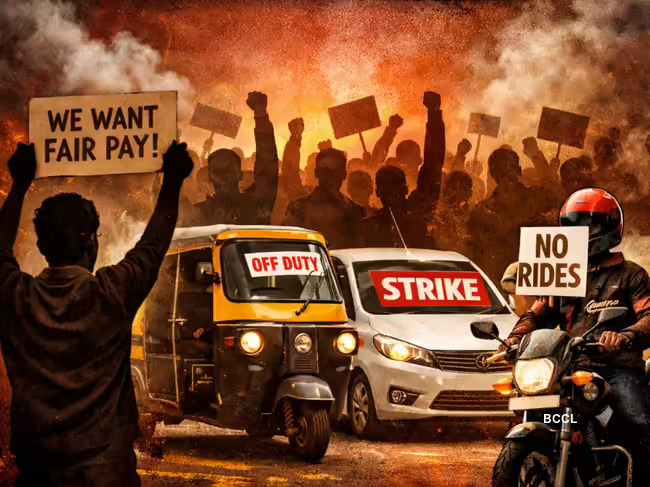
Today, February 7, millions of workers across India employed by ride-hailing and food delivery platforms — Ola, Uber, Swiggy, and Zomato — have launched a nationwide strike. The protest comes amid growing concerns over low pay, delayed incentives, safety issues, and the overall working conditions faced by gig workers.
The strike has affected multiple major cities, including Mumbai, Delhi, Bangalore, Hyderabad, and Pune. Commuters are reporting significant difficulties booking rides, while food delivery services are experiencing delays and cancellations, leaving customers frustrated.
Workers’ Demands:
Union representatives have outlined their key demands:
- Better wages: Many drivers and delivery executives claim that the current payment structure does not match the cost of fuel, vehicle maintenance, and living expenses.
- Timely incentives: Bonuses and incentives are often delayed or unclear, reducing overall earnings.
- Safety measures: Workers are requesting stronger safety protocols, especially for late-night deliveries and rides.
- Job security: As gig work lacks formal contracts, workers are pushing for better employment protections.
Company Response:
So far, companies have issued statements acknowledging the strike but have not agreed to any immediate changes. Uber and Ola emphasized their commitment to “fair pay and safety” for drivers, while Swiggy and Zomato assured customers that “efforts are being made to minimize disruption.”
Impact on Customers:
The strike has already caused widespread inconvenience for commuters and food delivery users. Analysts predict that the situation could continue for the rest of the day, urging people to plan ahead. Some experts also note that such strikes may become more frequent unless the gig economy addresses worker grievances in a sustainable manner.
Industry Implications:
This strike underscores a larger conversation about the gig economy in India. While these platforms offer flexible work, many workers argue that the benefits do not outweigh the challenges. Industry experts suggest that ongoing disputes over pay and safety could affect customer trust and operational efficiency for these companies in the long term.
Authorities have advised citizens to explore alternate transport options and order food in advance wherever possible. Meanwhile, worker unions have stated that they are open to negotiations but are firm on their demands for fair compensation and better working conditions.
The strike today serves as a stark reminder of the growing tension between gig economy companies and their workforce — a balance that India’s booming digital economy will need to address in the coming years.
Aaj, 7 February ko, India ke ride-hailing aur food delivery platforms — Ola, Uber, Swiggy aur Zomato — ke millions workers nationwide strike par hain. Ye protest isliye ho raha hai kyunki workers ko kam pay, delayed incentives, safety issues aur overall working conditions ko lekar chinta hai.
Strike ka effect multiple major cities mein dikh raha hai, jaise Mumbai, Delhi, Bangalore, Hyderabad aur Pune. Commuters ko rides book karne mein mushkil ho rahi hai, aur food delivery services mein delays aur cancellations ho rahe hain, jisse customers frustrated hain.
Workers ki Maange:
Union representatives ne apni key demands batai hain:
- Better wages: Kai drivers aur delivery executives ka kehna hai ki current payment structure fuel, vehicle maintenance aur living expenses cover nahi karta.
- Timely incentives: Bonuses aur incentives aksar delay hote hain ya clear nahi hote, jisse overall earnings kam ho jaati hain.
- Safety measures: Workers late-night deliveries aur rides ke liye strong safety protocols chahte hain.
- Job security: Gig work mein formal contracts nahi hote, isliye workers better employment protections ke liye demand kar rahe hain.
Company Response:
Abhi tak companies ne strike acknowledge kiya hai, lekin koi immediate changes announce nahi kiye. Uber aur Ola ne apna commitment dikhaya “fair pay aur safety” ke liye, jabki Swiggy aur Zomato ne customers ko assure kiya ki “efforts ho rahe hain disruptions ko minimize karne ke liye.”
Impact on Customers:
Strike ke wajah se commuters aur food delivery users ko kaafi inconvenience ho rahi hai. Experts ka kehna hai ki ye situation poore din continue kar sakti hai, isliye log plan ahead karein. Kuch analysts suggest kar rahe hain ki agar gig economy workers ki grievances solve nahi hui, toh aise strikes future mein bhi ho sakte hain.
Industry Implications:
Ye strike India ke gig economy ke larger issues ko highlight karta hai. Platforms flexible work offer karte hain, lekin workers ka kehna hai ki benefits challenges ke barabar nahi hain. Experts suggest karte hain ki ongoing disputes pay aur safety ko lekar, companies ke liye customer trust aur operational efficiency affect ho sakti hai long term mein.
Authorities ne citizens ko advise kiya hai ki alternate transport options use karein aur food delivery advance mein order karein. Workers unions ne kaha hai ki negotiations ke liye open hain, lekin fair compensation aur better working conditions ke liye firm hain.
Aaj ka strike ek clear reminder hai ki gig economy companies aur unke workforce ke beech balance maintain karna ab India ke booming digital economy ke liye critical ho gaya hai.