
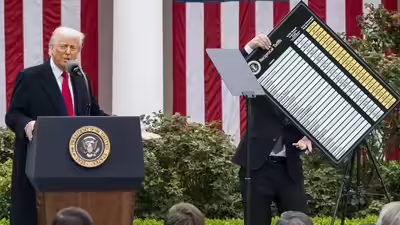
In a significant development that has reshaped India–US trade relations over the past year, the United States under former President Donald Trump altered tariff duties on Indian imports multiple times, culminating in a recent reset to a 10 % global levy. The tariff saga began in early 2025 when the US imposed a 26 % total tariff on Indian goods on April 2 — comprising a baseline 10 % duty plus an additional reciprocal component aimed at balancing trade deficits.
Following intense negotiations and temporary suspensions, Washington further raised levies. On August 7, 2025, the duty was increased to 25 %, and by August 27 it doubled to 50 % after an added 25 % penalty linked to India’s purchase of Russian oil, marking the peak of trade tensions.
Diplomatic engagement in late 2025 and early 2026 saw progress toward a bilateral trade deal that briefly reduced additional tariffs to 18 % by February 2, 2026, offering relief to exporters.
The legal landscape shifted again on February 20, 2026, when the US Supreme Court struck down broad tariff powers under the International Emergency Economic Powers Act, invalidating many of the earlier reciprocal duties. In response, the Trump administration invoked alternative legal authority to impose a temporary 10 % global duty on most imports, including from India, effective February 24, 2026. The future of tariff rates for Indian exports now hinges on the formal signing and implementation of the India–US trade deal.
The series of tariff changes reflects ongoing protectionist trends in US trade policy as well as persistent negotiation efforts by India to mitigate adverse impacts on its export sectors.
US aur India ke beech trade tensions pichle ek saal mein kaafi uthal-puthal bhare rahe. Former US President Donald Trump ne Indian exports par tariffs ko kai baar badla — 26% se lekar 50% tak, aur ab temporary 10% global duty tak baat pahunch chuki hai.
Shuruaat April 2, 2025 ko hui jab US ne Indian goods par total 26% tariff lagaya — ismein 10% base duty aur extra reciprocal component shamil tha. Iska aim trade deficit ko balance karna bataya gaya.
Baad mein tensions aur badh gaye. August 7, 2025 ko duty 25% tak revise hui, aur August 27 ko yeh 50% tak pahunch gayi. Yeh bada jump India ke Russian oil purchases se joda gaya, jise US ne policy concern bataya.
Negotiations ke baad early 2026 mein kuch relief mila aur additional tariffs temporarily kam hue. Lekin February 20, 2026 ko Supreme Court of the United States ne emergency powers ke tahat lagaye gaye broad tariffs ko strike down kar diya.
Iske turant baad Trump administration ne alternative legal route use karke 24 February 2026 se 10% ka temporary global tariff impose kar diya — jo India par bhi apply hota hai.
Ab focus India-US trade deal par hai. Agar agreement finalize hota hai, toh Indian exporters ko stable tariff structure mil sakta hai. Filhaal, New Delhi situation ko closely monitor kar raha hai aur trade talks ke outcome ka intezaar hai.