
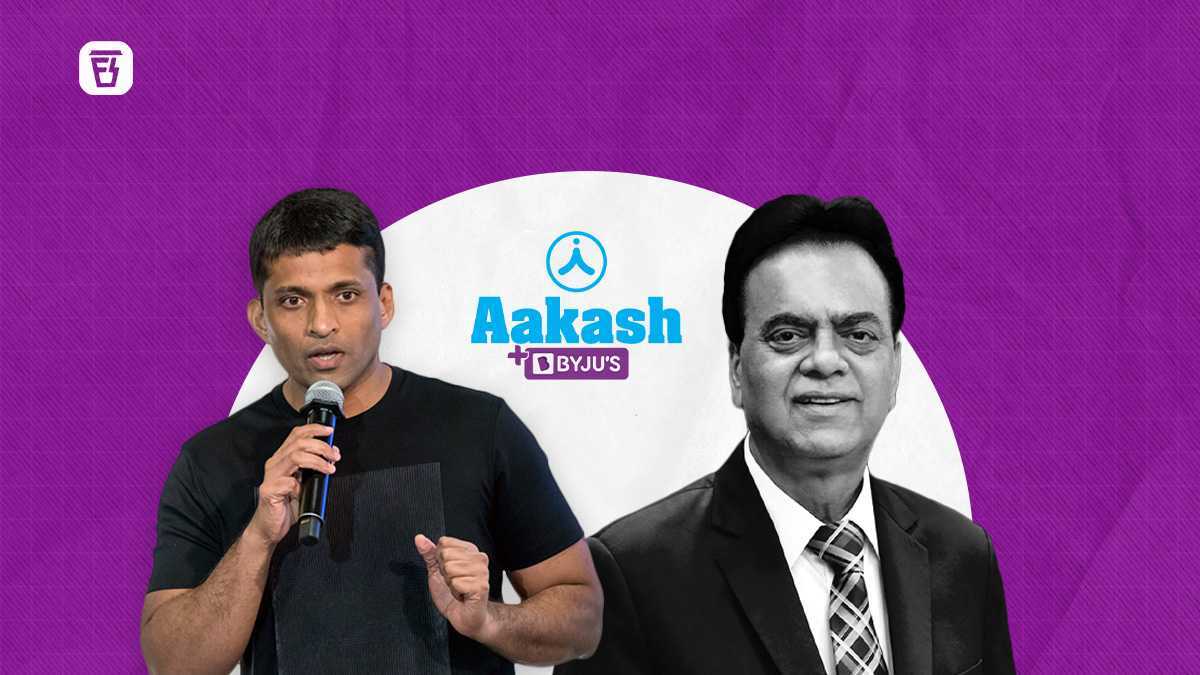
Amid ongoing troubles at edtech major Byju’s, Aakash Institute has once again come under the spotlight, after its recent ₹16 crore rights issue raised concerns among lenders and regulators. The development is seen as sensitive because Aakash remains the most valuable and stable asset within the Byju’s ecosystem.
Why Aakash Is at the Centre of the Storm
Aakash Institute, a leading name in the coaching sector, was acquired by Byju’s in 2021 for nearly $1 billion. While Byju’s parent company, Think & Learn, has since turned insolvent and is locked in multiple legal battles with lenders, Aakash has continued to operate profitably.
This has made Aakash the single most critical asset for lenders seeking recovery of their dues.
Current Ownership Structure
Aakash’s shareholding is currently structured as follows:
Manipal Group holds around 58% stake, giving it management control
Think & Learn (Byju’s) owns approximately 26%
Byju Raveendran, through overseas entities, holds about 16%
Importantly, Aakash’s shares are pledged as collateral for a $150 million loan taken from the Qatar Investment Authority (QIA). In the event of a default, lenders’ recovery would largely depend on the value of Aakash.
What Changed in the Rights Issue
The controversy emerged after Aakash raised ₹16 crore through a rights issue, under which new shares are offered to existing shareholders.
Initially, Aakash stated that the investment had come from Beeaar Investco, a Singapore-based firm said to be owned by Byju Raveendran. However, Indian regulatory filings later identified the investor as Bisy Philip, a UAE-based businesswoman.
This discrepancy has raised several questions, particularly among lenders and regulators who are already closely monitoring governance practices and fund movements at Byju’s.
Why It Matters
Experts say such transactions, especially when a company is under significant legal and financial stress, raise serious concerns around transparency and control. Since Aakash is a pledged asset, any change in shareholding or capital structure can directly impact lenders’ interests.
As a result, even a relatively small ₹16 crore transaction has triggered alarm bells, pushing the Byju’s–Aakash deal back under intense scrutiny.
Edtech major Byju’s se judi troubles ke beech, Aakash Institute ek baar phir controversy ke centre mein aa gaya hai, jab company ke recent ₹16 crore rights issue ne lenders aur regulators dono ko alert kar diya hai. Yeh development isliye sensitive maana ja raha hai kyunki Aakash ab Byju’s ecosystem ka sabse valuable aur stable asset bacha hua hai.
Why Aakash Is at the Centre of the Storm
Aakash Institute, jo coaching space ka ek leading naam hai, ko Byju’s ne 2021 mein lagbhag $1 billion mein acquire kiya tha. Jab Byju’s ki parent company Think & Learn ab insolvent ho chuki hai aur lenders ke saath court battles lad rahi hai, us dauran bhi Aakash profit mein chal raha hai.
Isi wajah se Aakash lenders ke liye sabse critical asset ban gaya hai.
Current Ownership Structure
Abhi Aakash ki ownership kuch is tarah hai:
Manipal Group ke paas lagbhag 58% stake hai, jiske chalte company ka control unke paas hai
Think & Learn (Byju’s) ke paas kareeb 26% stake
Byju Raveendran, overseas entities ke through, lagbhag 16% stake hold karte hain
Sabse important baat yeh hai ki Aakash ke shares Qatar Investment Authority (QIA) se liye gaye $150 million loan ke collateral ke taur par pledged hain. Matlab, agar Byju’s loan default karta hai, toh lenders ka recovery largely Aakash par depend karta hai.
Rights Issue Mein Kya Badla
Recent controversy tab shuru hui jab Aakash ne rights issue ke zariye ₹16 crore raise kiye. Rights issue mein naye shares existing shareholders ko offer kiye jaate hain.
Shuru mein Aakash ki taraf se yeh kaha gaya ki investment Beeaar Investco, ek Singapore-based firm ne kiya hai, jo Byju Raveendran ki ownership mein batayi gayi.
Lekin baad mein Indian regulatory filings mein investor ka naam Bisy Philip, ek UAE-based businesswoman, ke roop mein dikhaya gaya. Is mismatch ne kai sawal khade kar diye — khas kar lenders aur regulators ke liye, jo already Byju’s ke governance aur fund movements ko lekar cautious hain.
Why It Matters
Experts ka kehna hai ki is tarah ke transactions, jab company already legal aur financial stress mein ho, transparency aur control ko lekar serious concerns paida karte hain. Kyunki Aakash pledged asset hai, isme kisi bhi tarah ka stake change ya capital infusion lenders ke interests ko directly impact karta hai.
Isi wajah se ₹16 crore ka relatively chhota amount bhi bade alarm bells baja raha hai, aur Byju’s–Aakash deal ek baar phir scrutiny ke daayre mein aa gayi hai.
This news is for information only and is not investment advice. Please do your own research before making investment decisions.